
Before selecting a nitrogen compressor, you must first answer a key question: Is the nitrogen being directly compressed, or is it produced from compressed air? These two operating conditions place different demands on the compressor, and confusing them is a common cause of selection errors. The following sections will explain the suitability of each compressor type and the criteria for making that determination, based on these two scenarios.
First, distinguish between the two operating conditions.
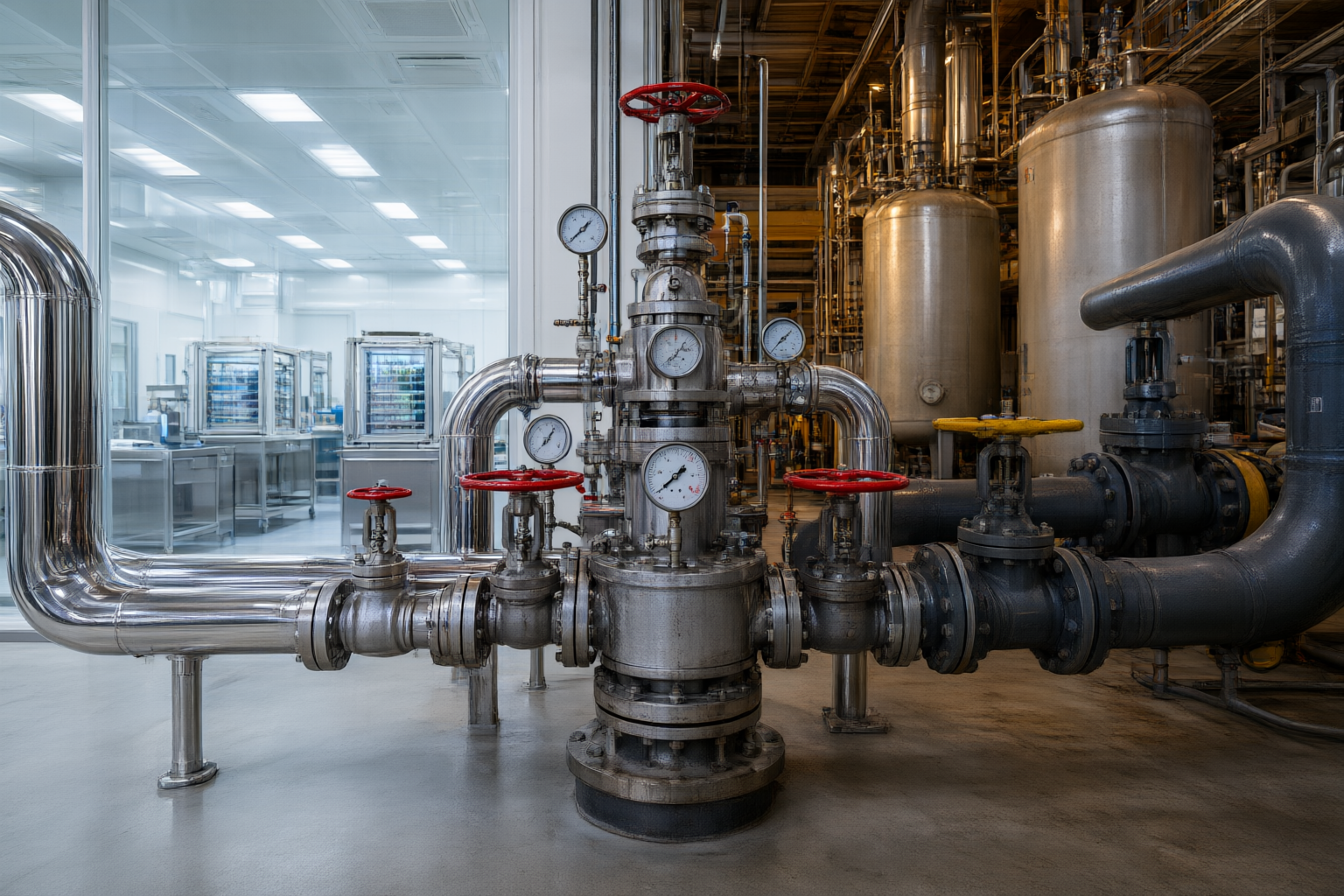
Operating Condition 1: Supplying feed gas to the on-site nitrogen generation system.When nitrogen is produced using pressure swing adsorption (PSA) or membrane separation, the air compressor compresses ambient air, and the nitrogen is generated by the separation unit. In such cases, the primary consideration during equipment selection is the quality of the air supply: oil, moisture, and particulate matter in the feed gas can adversely affect the performance and service life of the adsorbent or membrane elements, necessitating stringent control of oil content and robust post-treatment configurations.
Operating Condition 2: Direct compression of nitrogen gas.For example, nitrogen‑boosted输送, nitrogen cylinder filling, and process pipeline pressure boosting. In these cases, the compressor comes into contact with nitrogen itself; if the downstream application has purity requirements, an oil‑free design should be prioritized to prevent direct contamination of the gas by lubricating oil.
Applicability of Various Types of Compressors
Oil-free reciprocating piston type
It is suitable for nitrogen compression or boosting under medium-to-low flow rates and medium-to-high pressure conditions. The oil-free piston design achieves separation between the gas and lubricating oil through self-lubricating materials or special seals, making it commonly used in applications requiring higher discharge pressures. Components such as the gas valves and piston rings are wear-prone, resulting in a relatively high maintenance workload.
Oil-free screw type
Dry, oil-free screw compressors are suitable for applications with high flow rates and continuous operation; they can serve as the feed gas source for nitrogen generation systems and are also appropriate for compressing nitrogen in applications sensitive to oil content. Oil-injected screw compressors, when used as the feed gas for nitrogen generation, must be equipped with reliable oil–gas separation and multi-stage filtration; direct use for compressing high-purity nitrogen is not recommended.
Centrifugal
Suitable for high-flow applications. In its centrifugal design, the lubricating oil does not come into contact with the gas, making it inherently oil-free. The pressure ratio per stage is limited, so higher pressures require multi-stage series configurations; it is typically used in systems with large flow requirements.
Scroll-type
Oil-free design, suitable for low-flow, low-pressure applications such as laboratories or decentralized small-scale nitrogen supply points. The maximum flow rate is relatively low, making it unsuitable for large-scale gas supply.
Diaphragm type
The diaphragm completely isolates the gas chamber from the lubrication side, ensuring that the gas remains free from oil contamination, making it suitable for compressing nitrogen with high purity, relatively high pressure, and medium to small flow rates. The diaphragm is a critical wear part and must be maintained and replaced according to the specified procedures.
| Type | Oil content control | Traffic adaptability | Stress tolerance | Typical uses |
|---|---|---|---|---|
| Oil-free piston type | Oil-free | Small and medium-sized | Higher | Nitrogen boosting and cylinder filling |
| Oil-free screw type | Oil-free | CUHK | Primarily medium and low voltage. | Nitrogen-generation feed gas, continuous gas supply |
| Centrifugal | Oil-free in structure | big | Depending on the series. | High-flow device |
| Scroll-type | Completely oil-free | small | Lower | Laboratories, small-scale applications |
| Diaphragm type | Complete isolation | small | Higher | High-purity nitrogen |
| Oil-injected screw compressor (with aftertreatment) | Dependency filtering | CUHK | Medium pressure | Nitrogen-producing feed gas with low purity requirements |
The above table provides a general comparison; specific capabilities shall be subject to the model and the manufacturer’s technical documentation.
Conditions to be confirmed before selection
- Purity and oil content requirements:Whether the downstream process permits trace amounts of oil directly determines whether an oil-lubricated compressor can be used.
- Exhaust pressure:Whether the requirement is to meet the feed gas pressure of the nitrogen generation unit or to achieve the boosted target pressure, the corresponding equipment models differ.
- Traffic and load characteristics:For continuous operation, prefer screw or centrifugal compressors; for intermittent high-pressure applications, piston-type compressors are recommended; for small-scale, low-capacity systems, scroll compressors may be considered.
- Nudity requirements:If the application is sensitive to moisture, a drying device must be installed external to the compressor.
- Existing system conditions:If a nitrogen generation unit has already been installed, the compressor configuration should be determined based on the specifications of its feed gas, rather than being decided independently.
Common misconceptions
- Using a conventional oil-lubricated air compressor directly for nitrogen boosting results in oil contamination entering the nitrogen system.
- Some believe that nitrogen’s chemical inertness allows for more relaxed selection criteria. While its inert nature reduces the risk of material corrosion, it does not eliminate the need for cleanliness requirements.
- When selecting a compressor for a nitrogen-generation system, some people focus solely on pressure and flow rate, neglecting the impact of the feed gas’s oil content and moisture level on the adsorbent or membrane components.
- Using a single equipment model to serve multiple nitrogen supply points with significantly different requirements results in insufficient high-pressure-side pressure or reduced operating efficiency on the low-pressure side.
Selection Conclusion
When compressors are used for on-site nitrogen generation, the primary requirement is to supply clean, dry, and pressure-stable feed gas; oil-free screw compressors or oil-injected screw compressors equipped with comprehensive aftertreatment are commonly chosen. When directly compressing nitrogen and purity is a critical factor, selection should be based on pressure and flow rate among oil-free piston, oil-free screw, and diaphragm compressors. For low-flow, low-pressure testing applications, scroll compressors may be suitable. The final compressor model should be determined by considering purity, pressure, flow rate, load characteristics, and aftertreatment configuration, and confirmed in accordance with the technical specifications of the specific equipment.
There are no comments yet. Be the first to comment!